Ignite Your Metabolism: A Guide to Cardio for Fat Loss
For many people, the journey to a leaner body feels like a frustrating puzzle. You spend hours on the treadmill, yet the scale barely moves. The truth is, not all cardio is created equal. To see real results, you need a smart, strategic approach. This guide will show you exactly how to use **cardio for fat loss** by leveraging the power of science. We’ll cut through the myths and provide you with a clear roadmap, helping you understand the most effective exercises and intensity levels to achieve your goals.
The Science of Fat Burning: The Why Behind Your Workout
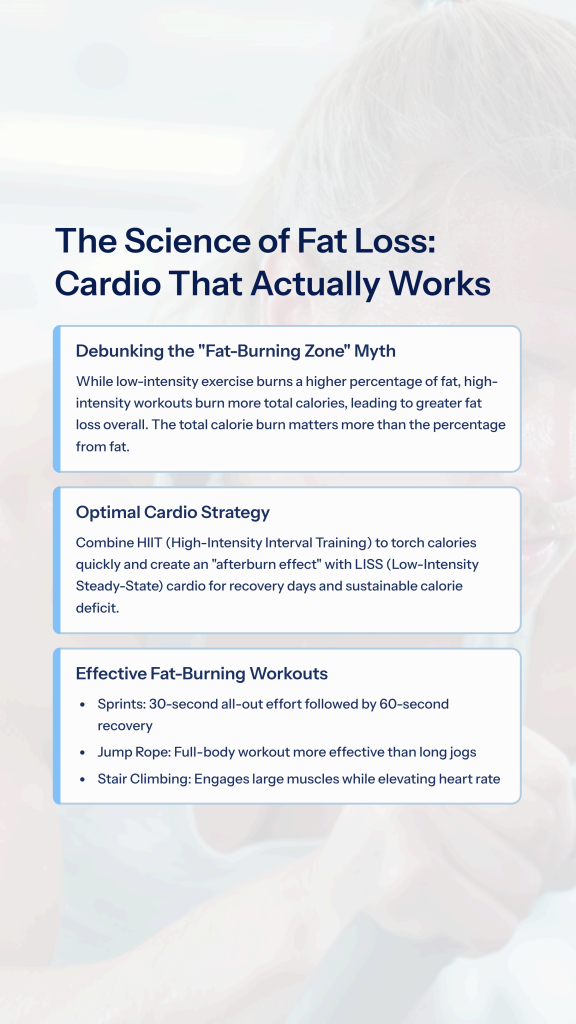
Cardiovascular exercise elevates your heart rate. It increases oxygen consumption. This directly impacts your body’s ability to burn calories and, over time, fat. The key is to understand your body’s energy systems. During exercise, your body uses two fuel sources: carbohydrates and fat. The ratio of these two sources depends on the intensity and duration of your workout.
“The ‘fat-burning zone’ is a real concept, but it’s not the whole story. You burn more total calories (and therefore more fat) at higher intensities.”
My professional experience has taught me that the most effective approach combines both high and low-intensity cardio. Low-intensity steady-state (LISS) cardio is excellent for recovery. It burns calories without excessive stress on your body. High-intensity interval training (HIIT), on the other hand, supercharges your metabolism. It creates a powerful “afterburn effect,” where your body continues to burn calories after your workout. For more expert-backed advice on creating a balanced fitness plan, our website offers a wealth of resources.
HIIT vs. LISS: Choosing the Right Strategy
Choosing between HIIT and LISS depends on your fitness level and goals. Both have distinct advantages for fat loss.
High-Intensity Interval Training (HIIT)
HIIT involves short, intense bursts of exercise. These are followed by brief recovery periods. A common example is sprinting for 30 seconds. Then, you walk for 60 seconds. Repeat this for 15-20 minutes.
- Benefits: Burns more calories in less time. It boosts your metabolism for hours post-workout. It also improves cardiovascular health.
- Examples: Sprints, burpees, battle ropes, cycling.
Low-Intensity Steady-State (LISS)
LISS is a continuous, steady-paced exercise. It is performed at a moderate intensity. A brisk walk or a light jog are classic examples.
- Benefits: Great for beginners. It has a lower risk of injury. It is excellent for active recovery.
- Examples: Brisk walking, light cycling, swimming, jogging.
Combining both is the most effective long-term strategy. For a healthier lifestyle overall, check out our guide on 10 tips for a healthy life.
Common Mistakes That Sabotage Your Progress
Even with the right workouts, small mistakes can hold you back.
- Ignoring Nutrition: You cannot out-train a bad diet. Nutrition is the primary driver of fat loss.
- Not Getting Enough Sleep: Lack of sleep disrupts hormones that regulate appetite and fat storage.
- Doing Only Cardio: Strength training is vital. Building muscle increases your metabolic rate. It turns your body into a more efficient fat-burning machine. For more insights into building mental and physical strength, read our article on 7 habits of mentally strong people.
Conclusion: Your Path to Lasting Results
Fat loss isn’t a race; it’s a journey. By strategically incorporating both HIIT and LISS, focusing on consistency, and prioritizing your nutrition, you can master **cardio for fat loss** and achieve the results you’ve been working for.